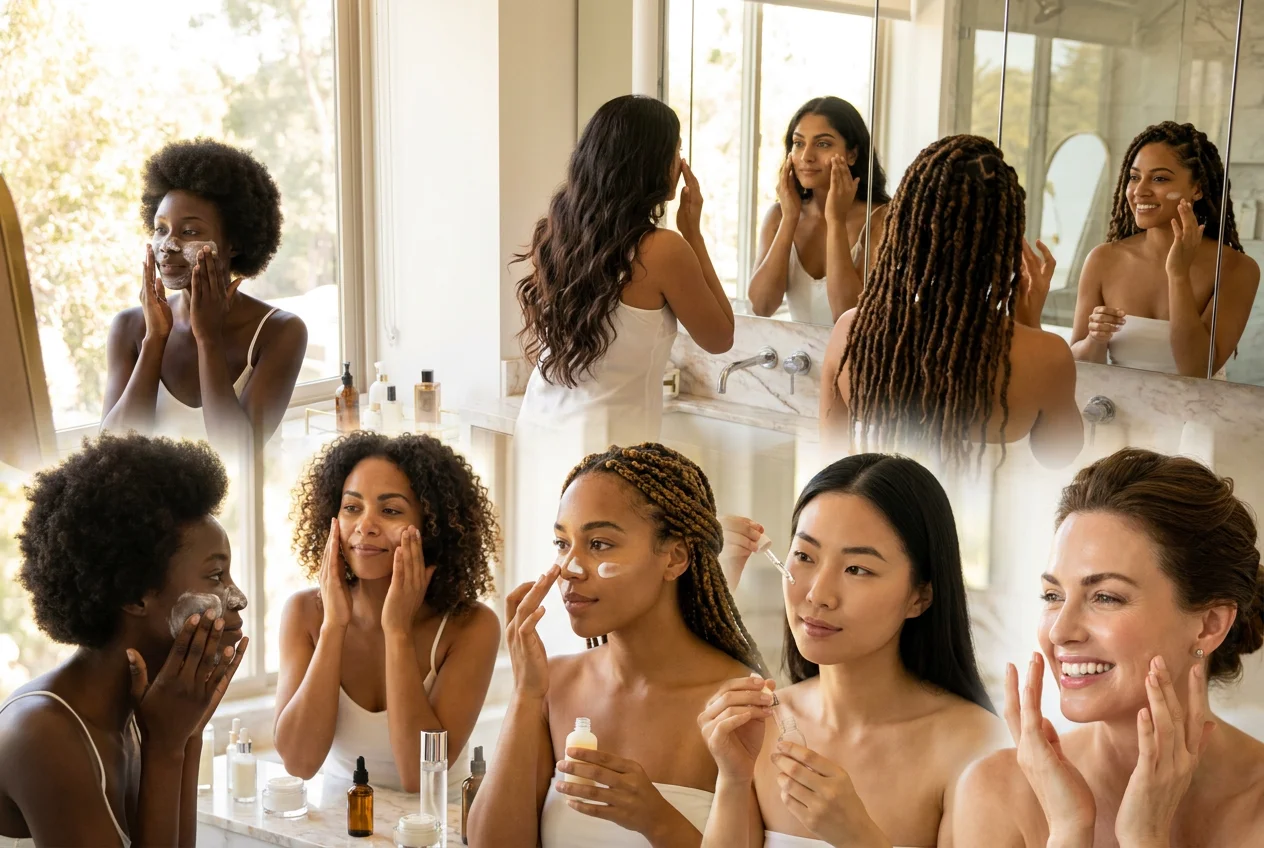

Skin Cycling for Beginners: A Simple Weekly Plan
Learn a beginner-friendly skin cycling routine that reduces irritation, supports consistency, and works for every shade of skin.

Skin cycling is a simple weekly skincare routine that rotates active products with recovery nights so your skin gets results without constant overload. For beginners, the easiest version is four nights: exfoliation, retinoid, recovery, recovery. That structure can help reduce irritation, support consistency, and make it easier to track what is actually helping your skin. It is especially useful when you want a routine that fits real life, respects every shade, and avoids the guesswork that often leads to overdoing it.
What skin cycling actually means
Skin cycling is not a trendy way to use more products. It is a framework for using fewer strong products on fewer nights, on purpose. Instead of layering exfoliants, retinoids, brighteners, and masks whenever you remember, you assign specific jobs to specific nights.
The classic beginner cycle looks like this:
Night 1: Exfoliation
Night 2: Retinoid
Night 3: Recovery
Night 4: Recovery
Then you repeat. This rhythm helps you build consistency while giving your skin barrier breathing room. If you already use tools like AI Skin Analysis or track changes through Glow Reports, skin cycling also makes patterns easier to spot because you know what your skin was exposed to on each night.
Why skin cycling works for beginners
Beginners often struggle for one of two reasons: they use too little too inconsistently to notice change, or they use too much too fast and end up irritated. Skin cycling sits in the middle. It gives you enough structure to stay on track and enough restraint to avoid turning every week into a reset.
- It lowers the chance of irritation by separating stronger products.
- It simplifies decisions so you do not need to improvise every night.
- It improves tracking because you can connect reactions to a specific step.
- It supports skin barrier health with planned recovery time.
- It can be adapted for every shade, including melanin-rich skin that may be more prone to visible post-inflammatory marks after irritation.
That last point matters. On deeper skin tones across Fitzpatrick I-VI and Monk 1-10, irritation does not just feel uncomfortable; it can leave lingering discoloration that lasts longer than the original breakout or rash. A melanin-aware routine is not about being fragile. It is about being strategic.
A simple weekly skin cycling routine
Morning routine: keep it steady
Your morning routine usually stays the same throughout the week:
- Gentle cleanser or rinse
- Hydrating serum or moisturizer
- Broad-spectrum sunscreen
Morning consistency matters because sunscreen helps protect your progress, especially if you are using exfoliants or retinoids at night. If you also wear complexion products, a good Foundation Match can help you choose formulas that sit well over your skincare without pilling or looking off-tone.
Night 1: Exfoliation night
Use a gentle chemical exfoliant after cleansing. For beginners, this usually means one exfoliating product, not a scrub plus acids plus a peel pad. Think simple.
Good beginner-friendly approach:
- Cleanser
- Exfoliant
- Moisturizer
If you are not sure what is in your product, use the Skincare Ingredient Checker or browse Ingredient Insights to understand whether you are dealing with AHAs, BHAs, PHAs, or a mix.
Night 2: Retinoid night
After cleansing, apply your retinoid, then moisturizer. If your skin is very new to retinoids, you can use the “sandwich” method: moisturizer, retinoid, moisturizer.
Keep the rest of the night basic. This is not the time to add exfoliating toner, strong vitamin C, or multiple treatment serums just because your routine feels short.
Nights 3 and 4: Recovery nights
Recovery nights are where the routine becomes sustainable. Focus on hydration and barrier support:
- Cleanser
- Hydrating serum, if you use one
- Moisturizer
You are not “doing nothing” on recovery nights. You are creating the conditions that help your skin tolerate the active nights better.
The beginner rule
If you are choosing between adding another active and adding another recovery night, recovery is usually the better beginner move.
How to choose products for your cycle
Pick one exfoliant
You do not need the strongest acid on the shelf. Start with a formula designed for regular home use, and avoid stacking multiple leave-on exfoliants. If your skin feels tight, hot, overly shiny, or reactive after use, that is useful information to act on, not a sign to push through.
Pick one retinoid
A gentle beginner retinoid is usually easier to stick with than an aggressive one you quit after two weeks. Slow consistency beats short bursts of intensity.
Choose a moisturizer you will actually use
The best recovery moisturizer is not the most expensive one. It is the one you will use enough of, often enough, to support your barrier.
Keep the rest boring on purpose
When a routine is built around cycling, your cleanser and moisturizer do a lot of quiet work. This is also where GlowLog's Melanin-Aware AI Beauty approach matters: product recommendations and progress tracking should respect how redness, dryness, dullness, and discoloration may present differently across skin tones, not assume one baseline for everyone.
Common mistakes that make skin cycling harder
Using exfoliation and retinoids on the same night
This is a common shortcut that often backfires for beginners.
Changing all products at once
If everything is new, it becomes hard to tell what is helping and what is causing stress.
Skipping recovery nights because your skin seems “fine”}
Skin does not always complain immediately. Recovery is preventive, not just reactive.
Forgetting sunscreen
Night routines work better when daytime protection is part of the plan.
Expecting overnight transformation
Skin cycling is built for steadier progress, not instant drama.
How to adjust the cycle for your skin
The four-night cycle is a starting point, not a rule carved in stone.
If your skin is very sensitive
Try extending the cycle:
- Night 1: Exfoliation
- Night 2: Recovery
- Night 3: Retinoid
- Night 4: Recovery
- Night 5: Recovery
If you are already experienced
You may eventually use fewer recovery nights, but the beginner goal is tolerance and consistency, not proving how much your skin can handle.
If you have a busy schedule
This is one of the biggest strengths of skin cycling. You do not need a long routine every night. You need a repeatable one. If you like planning routines around travel, events, or content capture, you can pair this with Event Prep Mode so your active nights do not land right before makeup-heavy days or important photos.
How to know if it is working
Look for patterns over weeks, not one dramatic morning. Signs your routine is working may include:
- Skin feels more stable and less reactive
- You are staying consistent without burnout
- Texture looks smoother over time
- Your products are easier to tolerate
- Your Glow Score trends are steadier, not constantly swinging
If you use the AI Beauty Studio, photos taken in similar lighting can help you review progress more objectively. That matters because skin changes can be subtle, and memory is not always a reliable before-and-after tool.
Who should skip DIY experimentation and ask a dermatologist
If you have persistent irritation, rapidly changing pigmentation, severe acne, suspected melasma, eczema flares, or any condition that seems beyond basic cosmetic care, it is best to see a qualified dermatologist. Skin cycling is a routine framework, not a diagnosis tool and not a treatment plan.
The bottom line
Skin cycling is a beginner-friendly way to make skincare more consistent, less irritating, and easier to track. For most people, the best place to start is simple: exfoliation night, retinoid night, then two recovery nights. Keep your morning routine steady, avoid stacking too many actives, and let progress be gradual. A good routine should fit your life, support every shade, and give you information you can use, whether you are tracking a Glow Score, reviewing Glow Reports, or just trying to make your skincare finally feel manageable. If you want help building a routine around your real schedule, skin goals, and tone-aware analysis, View Plans or Try GlowLog.
GlowLog provides educational beauty and skincare insights and tracking support. It does not provide medical advice, diagnosis, or treatment. Always consult a qualified dermatologist or healthcare professional for medical concerns. Individual results may vary.
See your skin’s story clearly.
Track hydration, texture, pigmentation, tone evenness, and glow over time with melanin-aware AI built for every shade.