
SPF for Dark Skin: No White Cast, Real Protection
SPF matters for dark skin too. Learn how to avoid white cast, choose filters, and build a melanin-aware sunscreen habit that fits daily life.
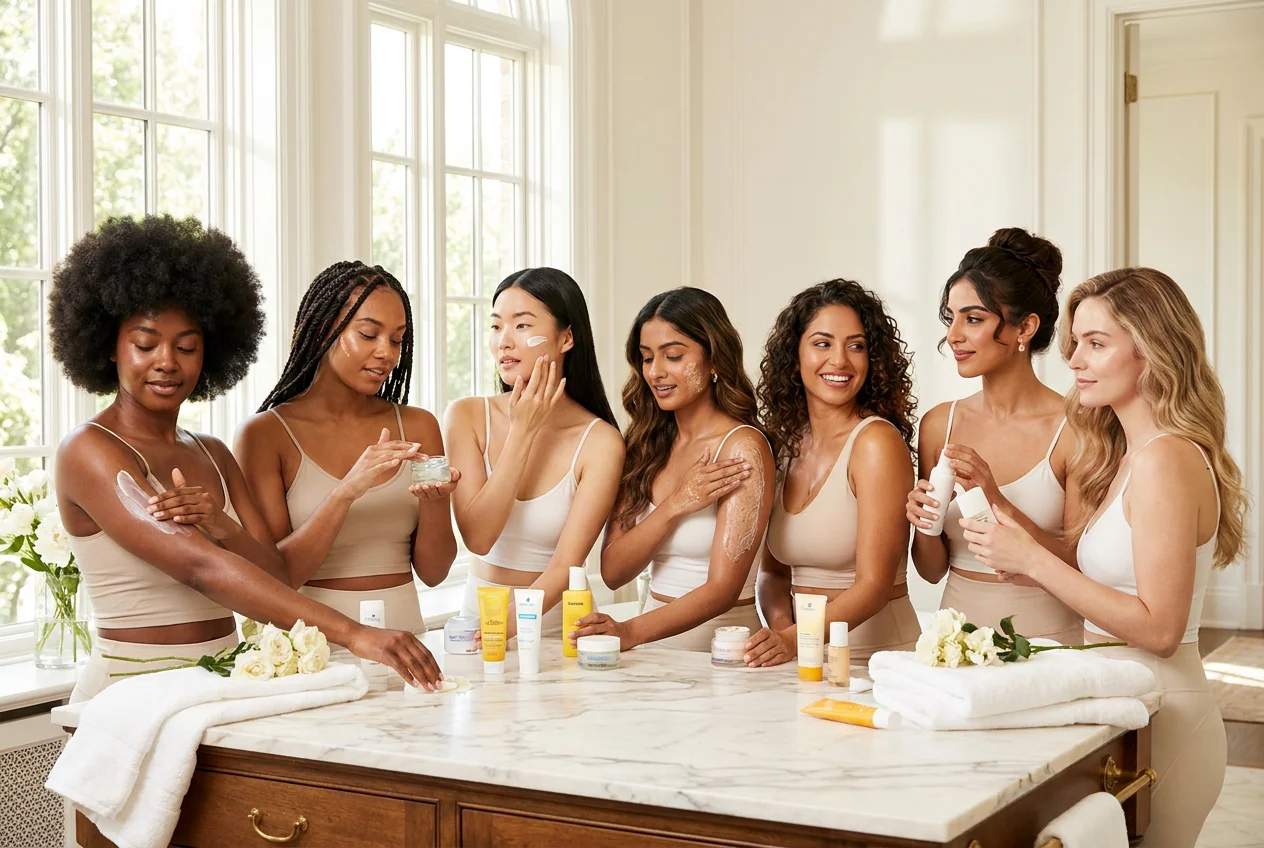
Yes, deeper skin tones still need daily SPF. Melanin offers some natural UV filtering, but not enough to fully prevent sun damage, uneven tone, or the worsening of post-blemish marks. The best sunscreen for dark skin is the one you will actually wear: broad-spectrum, comfortable, and as invisible as possible on your complexion. For many people, that means choosing elegant formulas, checking the finish in daylight, and matching texture and tint to your skin rather than settling for a chalky cast.
Why SPF still matters on melanated skin
One of the most persistent myths in beauty is that dark skin does not need sunscreen. In reality, every shade can experience UV-related skin changes. On deeper tones, the conversation is often less about visible burning and more about long-term tone shifts, stubborn marks, and texture changes that are easy to miss until they build up over time.
Melanin does provide some natural protection, but it is not a substitute for broad-spectrum sunscreen. UVA can contribute to signs of photoaging and can deepen existing discoloration. UVB is associated with sunburn, but both UVA and visible light can matter when you are trying to maintain an even-looking complexion, especially if you are already tracking post-inflammatory hyperpigmentation.
This is where a melanin-aware approach matters. At GlowLog, we think in terms of information, not blame. If your skin tone falls anywhere across Fitzpatrick I-VI or Monk 1-10, SPF is not about changing your color. It is about helping preserve clarity, comfort, and consistency in the skin you are in. That same philosophy powers our Melanin-Aware AI Beauty tools and the way we interpret images across every shade.
What “broad-spectrum” actually means
If you only remember one label term, make it broad-spectrum. That means the sunscreen is designed to protect against both UVA and UVB exposure. SPF numbers mainly reflect UVB protection, which is why SPF alone does not tell the whole story.
For everyday use, SPF 30 is a practical floor for many people. If you spend more time outdoors, sit near windows for long periods, or are especially focused on preventing the look of dark spots from lingering, SPF 50 may be a better fit. The most important point is consistency. A beautifully formulated SPF 30 worn daily usually beats an uncomfortable SPF 50 that stays in the drawer.
Quick rule of thumb
Look for “broad-spectrum,” SPF 30 or higher, and a finish that disappears well on your skin in natural light.
Why white cast happens
White cast usually comes from how certain UV filters sit on the skin and reflect light. Traditional mineral sunscreens, especially those with larger amounts of zinc oxide or titanium dioxide, can leave a gray, lavender, or chalky film on medium-deep to deep complexions. That does not make mineral sunscreen bad; it just means formulation matters a lot more when you are shopping for deeper tones.
Some newer mineral formulas use tint or more elegant dispersion systems to reduce cast. Many chemical or organic-filter sunscreens also wear more transparently. Remember: “chemical” is not a synonym for harmful. It simply refers to how the UV filters work. The right choice is the one your skin tolerates and your routine supports.
If you are ingredient-curious, our Skincare Ingredient Checker and Ingredient Insights pages can help you decode labels without the fear-based language that often clouds sunscreen conversations.
Best sunscreen formats for deeper skin tones
1. Tinted mineral sunscreens
These can be a great option if you prefer mineral filters but want less visible residue. The key is undertone range. A tint that works on light-medium skin may still look ashy on a rich brown or deep ebony complexion. Test along the jawline and check in daylight, not just bathroom lighting.
2. Clear chemical-filter sunscreens
These are often the easiest way to avoid white cast completely. They tend to come in serum, gel, milk, or fluid textures that disappear quickly and layer well under makeup. If your main barrier to sunscreen is cosmetic elegance, this category may feel easiest to stick with.
3. Moisturizer-SPF hybrids
These can work well for a minimalist morning routine, especially if you are busy. Just make sure you are applying enough product to get the labeled protection. If you under-apply because the texture is too rich, you may not be getting the result you expect.
4. SPF sticks and powders for touch-ups
These are useful for reapplication, especially over makeup, but they are usually best as support products rather than your only morning sunscreen. Think of them as maintenance tools.
How to choose without wasting money
Start with your finish preference.
Decide whether cast or eye sting is your bigger issue.
Match for undertone as well as depth.
Test with your real routine.
Check in daylight and with flash.
If shade harmony is part of your daily routine, GlowLog’s Foundation Match experience can help you think more clearly about undertones and flashback, especially when sunscreen and complexion products interact. You can also use the AI Makeup Checker to see how your base is reading overall.
SPF and hyperpigmentation: the connection people underestimate
For melanated skin, sunscreen is often less about chasing perfection and more about protecting progress. If you are already using brightening ingredients, working on post-blemish marks, or trying to keep your complexion looking even, daily UV protection supports that effort. Without it, marks can appear to linger longer or return to center stage more easily after sun exposure.
This does not mean you need to obsess over your skin. It simply means SPF is one of the most practical ways to maintain momentum. If you track changes with selfies, a consistent sunscreen habit can make your week-to-week data easier to interpret inside Glow Reports and with our AI Skin Analysis tools. Better consistency usually creates cleaner signals.
How much sunscreen should you apply?
Most people do not use enough. For the face alone, a generous amount is needed to reach the labeled SPF. You may have heard the “two-finger” method, which can be a helpful shortcut for lotions and creams, though texture and packaging can vary. The bigger idea is simple: if you apply a whisper-thin layer, your protection drops.
Do not forget often-missed areas like the ears, around the hairline, neck, and the upper chest if exposed. If you wear makeup, let sunscreen set before applying your base for the smoothest finish.
Do you need to reapply indoors?
It depends on your day. If you are mostly inside, away from strong daylight, and not sweating, your needs may be different than someone commuting, driving, eating lunch outdoors, or sitting by large windows. Reapplication becomes more important with extended outdoor time, sweat, or wiping the face.
If sunscreen always feels like too many steps, simplify. A streamlined morning routine plus an easy reapplication option is better than an elaborate plan you abandon by Wednesday. GlowLog users often pair this approach with our AI Beauty Studio to pressure-test what is actually working in real life, and with Event Prep Mode when they want their skin and makeup to photograph well for a specific day.
Common mistakes that make sunscreen harder to wear
Choosing by trend instead of finish:
Ignoring undertone in tinted formulas:
Applying too little:
Judging only under indoor lighting:
Expecting one formula to suit every situation:
A practical SPF mindset for every shade
The goal is not to find a perfect sunscreen on the first try. The goal is to find one you will wear often enough that it becomes boring in the best possible way. On deep skin, medium skin, olive skin, golden skin, and fair skin alike, a good SPF should support your routine without asking you to tolerate a finish that makes you feel unlike yourself.
That is what melanin-aware beauty should look like: products and tools designed with real-world wear in mind, calibrated across Fitzpatrick I-VI and Monk 1-10, and respectful of undertones, photography, and comfort. If you want help building a routine that fits your budget and schedule, explore the GlowLog Blog for more guidance or View Plans to Try GlowLog.
GlowLog provides educational beauty and skincare insights and tracking support. It does not provide medical advice, diagnosis, or treatment. Always consult a qualified dermatologist or healthcare professional for medical concerns. Individual results may vary.
See your skin’s story clearly.
Track hydration, texture, pigmentation, tone evenness, and glow over time with melanin-aware AI built for every shade.