

How to Find Your Foundation Match: Undertones, Depth & Avoiding Flashback
Foundation shopping is frustrating because shade is only half the story. Learn undertone, depth, and the flashback trap — with melanin-rich skin in mind.
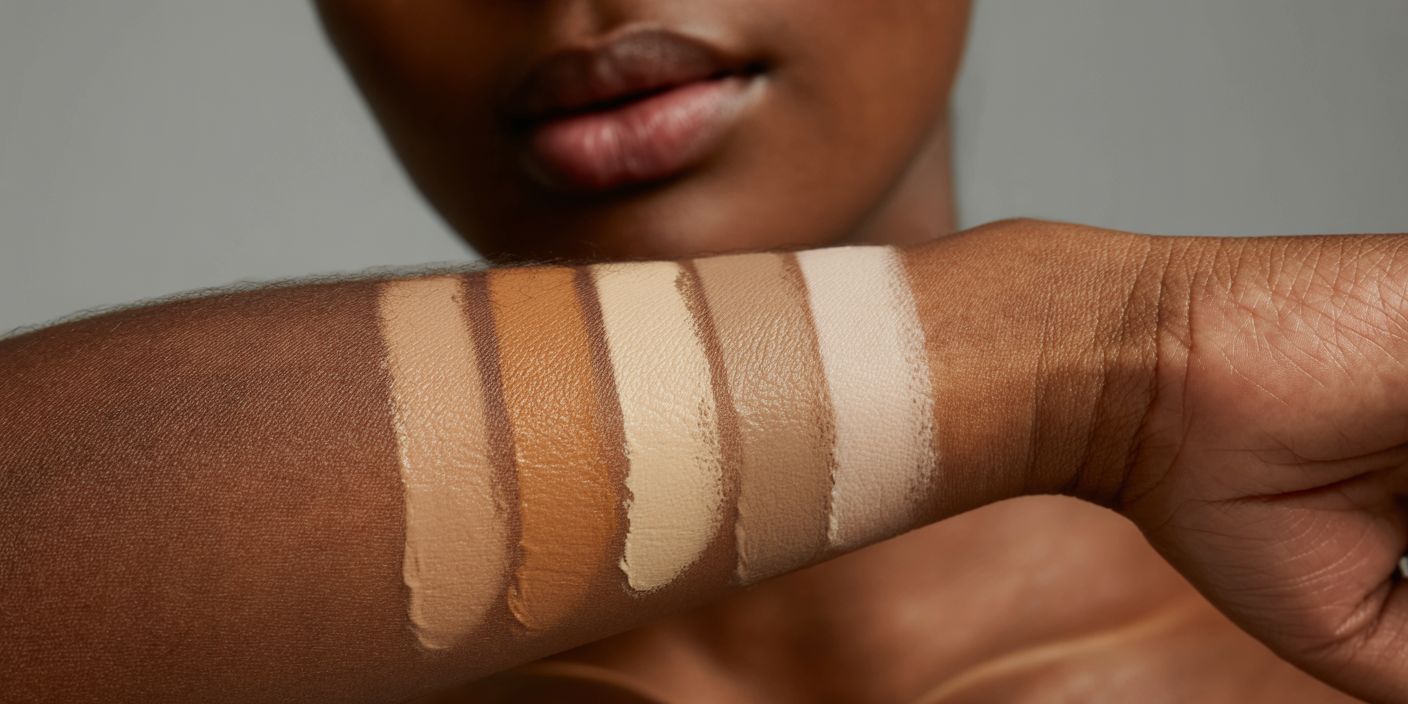
If you have ever bought a foundation that looked perfect in the bottle and wrong on your face, you are not alone. The reason is simple: matching foundation is about three things, not one — depth, undertone, and finish. Get all three right and your base disappears into your skin. Here is how to find your match with confidence.
1. Depth: light to deep
Depth is how light or dark the shade is. It is the easiest to eyeball but the most commonly mismatched, because skin oxidizes foundation — many formulas darken slightly after 15–20 minutes. The fix: always test, then wait. Swatch on your jaw, not your hand, and check it in daylight after it has settled.
2. Undertone: the part everyone misses
Undertone is the subtle hue beneath your surface color, and it does not change with a tan. The three families:
- Warm — golden, peachy, or yellow undertones
- Cool — pink, red, or bluish undertones
- Neutral — a balance of both
For melanin-rich skin, undertones are often rich and complex — warm golden, red, or olive — and many mainstream ranges historically got this wrong by going too ashy or too orange. A foundation that is the right depth but the wrong undertone is exactly why a shade can look "off" even when it technically matches.
Quick checks: look at the veins on your inner wrist (greenish leans warm, bluish leans cool), and notice whether silver or gold jewelry flatters you more (gold = warm, silver = cool).
3. The flashback trap
Flashback is that ghostly grey or white cast that shows up in photos, especially with flash. It is caused by high levels of light-reflecting ingredients like titanium dioxide and zinc oxide — common in SPF-containing foundations and setting powders. It is most visible on deep skin tones. To avoid it:
- Be cautious with heavy SPF foundations for evening or flash photography
- Patch-test in flash before a big event
- Choose powders labeled "no flashback" or translucent formulas made for deep skin
4. Finish and skin type
Finish ties it together. Dewy finishes flatter dry skin; matte suits oily skin; natural/satin works for most. If your base looks cakey, the issue is often skin prep, not the shade — hydration and the right primer fix more than people expect.
Let AI do the undertone math
Reading your own undertone in a store mirror is genuinely hard. GlowLog's Foundation Match analyzes your photo with tone-fair calibration to estimate your depth and undertone, then helps you translate that into shades that suit you — with melanin-rich skin treated as a first-class case, not an afterthought. Once your base is dialed in, run the whole look through the AI Makeup Checker.
The takeaway
Match depth, respect undertone, watch for flashback, and prep your skin. Do that and foundation stops being a gamble. Want it calibrated to your exact shade? Start with Foundation Match or learn why fairness matters in Melanin-Aware AI Beauty.
See your skin’s story clearly.
Track hydration, texture, pigmentation, tone evenness, and glow over time with melanin-aware AI built for every shade.