
Monk Skin Tone Scale and Beauty AI Explained
Learn what the Monk Skin Tone scale measures, how it improves beauty AI, and why better tone calibration matters for every shade.
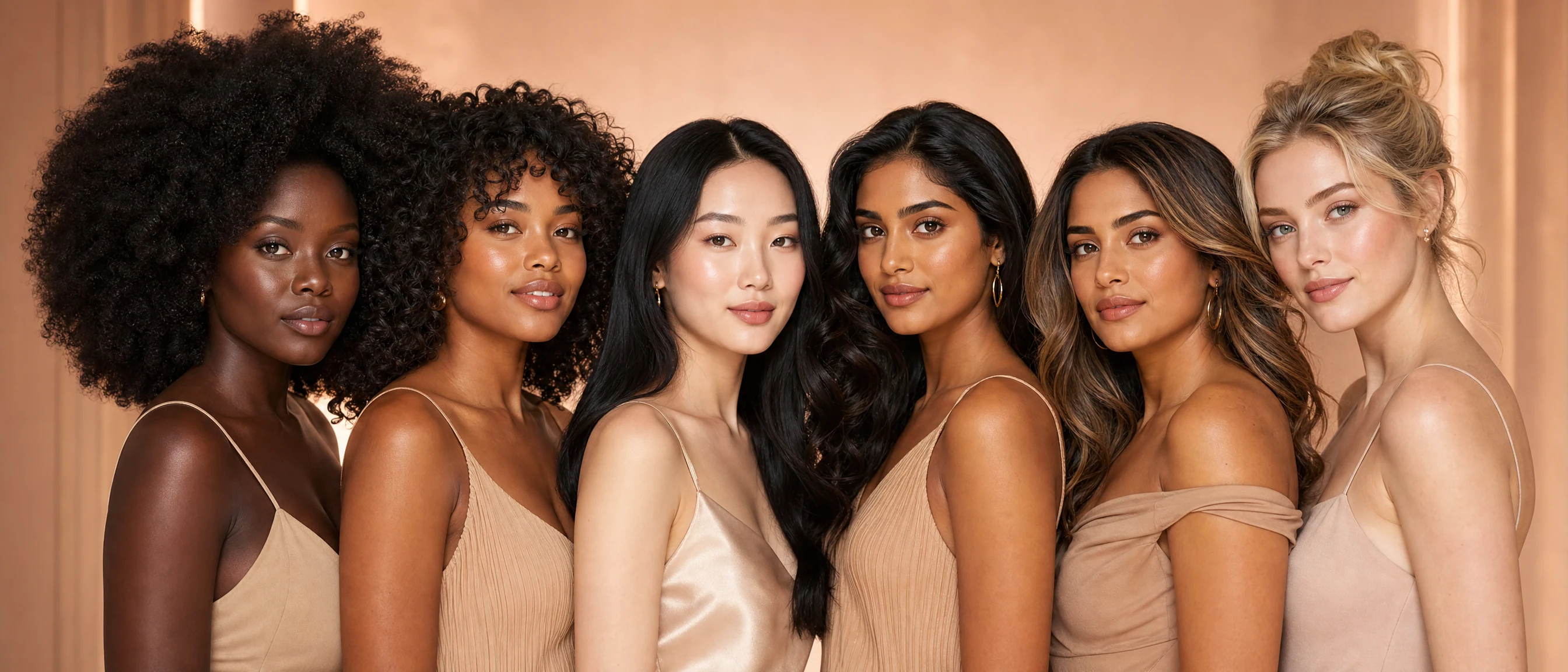
The Monk Skin Tone scale is a 10-shade system designed to represent a wider range of human skin tones more accurately than older image standards. In beauty AI, that matters because tone calibration affects everything from skin analysis to Foundation Match, flashback detection, and how well products are recommended across Fitzpatrick I-VI and Monk 1-10. A more inclusive scale does not “solve” bias by itself, but it gives melanin-aware systems a better starting point for serving every shade more fairly.
What is the Monk Skin Tone scale?
The Monk Skin Tone scale, often shortened to MST, is a skin tone classification framework with 10 reference shades. It was developed to improve how technology systems classify and represent skin color in images. In plain language: it gives cameras, datasets, and AI teams a more useful visual standard for the real diversity of human skin.
That matters because many older tech pipelines were built around narrower assumptions about lighting, exposure, and contrast. When a system is trained on limited examples, it may perform well for some people and less well for others. In beauty, that gap shows up in ways users notice immediately: missed redness on deep skin, poor undertone reads, over-brightening selfies, or product suggestions that seem made for someone else.
At GlowLog, this is part of what we mean by Melanin Intelligence: building tools that are more aware of how skin actually appears across different tones, undertones, and lighting conditions.
How is Monk different from Fitzpatrick?
The Monk Skin Tone scale and the Fitzpatrick scale are not interchangeable. They describe different things.
Fitzpatrick I-VI
Monk 1-10
If you are talking about SPF, you may reference Fitzpatrick I-VI because UV response is relevant. If you are talking about image analysis, color calibration, or beauty AI fairness, Monk 1-10 is often the more practical reference. The two scales can complement each other: one helps discuss sun-response patterns, and the other helps discuss visual representation.
Quick takeaway
Fitzpatrick is about how skin tends to react to UV. Monk is about how skin tone appears visually in imaging contexts. Good beauty AI should understand both.
Why does the Monk scale matter for beauty AI?
Beauty AI makes decisions from images. That means the quality of those decisions depends on what the model can see, how the image is processed, and whether the training data includes enough variation in skin depth and undertone. A broader tone reference helps teams test whether their tools work consistently across light, medium, tan, deep, and very deep complexions.
In practice, the Monk scale can improve beauty AI in several ways:
1. Better tone coverage in training and testing
If a model is only tested on a narrow slice of skin tones, it may look accurate on paper while still failing real users. Monk 1-10 gives teams a clearer way to audit representation across datasets and benchmark performance by shade group.
2. More reliable skin feature detection
Concerns like hyperpigmentation, dryness, shine, and post-blemish marks can look different across skin tones. On deeper tones especially, contrast patterns may differ from what standard systems expect. A more inclusive reference helps an AI Skin Analysis system avoid treating lighter-skin patterns as the default visual template.
3. More accurate complexion product matching
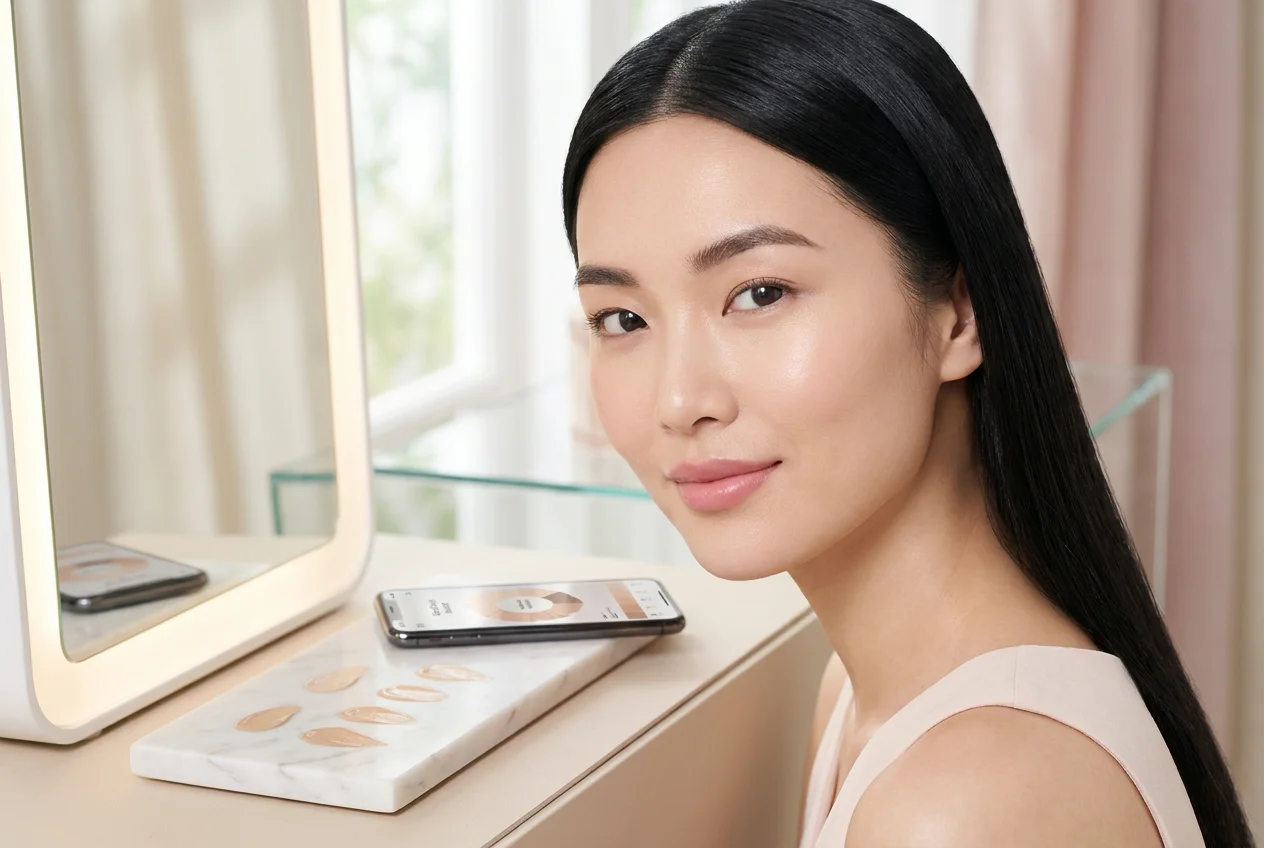
Foundation is not just about lightness or darkness. It also involves undertone, oxidation risk, finish, and how formulas appear in photos. A better tone scale supports a smarter Foundation Match experience by reducing tone compression, where several distinct deep shades get lumped together.
4. Less bias in photo-based recommendations
Beauty AI often works from user selfies taken in mixed lighting. If a system overexposes deep skin or reads warm skin as red, recommendations can drift. Monk-aware evaluation helps teams check whether recommendations remain consistent across every shade.
What the Monk scale does not do
The Monk scale is useful, but it is not magic. It does not automatically make an AI product fair, accurate, or culturally aware. It is one part of a better process.
For example, a beauty model can still underperform if:
- its training images are poorly lit or low quality
- undertones are not labeled carefully
- product swatches are inconsistent between brands
- the camera pipeline lightens or dulls darker skin
- evaluation focuses only on average accuracy instead of shade-by-shade performance
In other words, representation is necessary, but so is testing. That is why melanin-aware beauty tech should be transparent about how it handles image quality, undertones, and confidence thresholds. If you want a closer look at how these systems work in practice, our post on the GlowLog Blog goes deeper into AI, skin, and product matching from a consumer perspective.
How this shows up in real beauty use cases
Selfie skin analysis
When users upload a selfie, the system needs to separate lighting effects from skin information. On deeper skin tones, poor exposure can hide dryness or flatten dimension; on lighter tones, bright light can exaggerate redness or wash out texture. A stronger calibration framework helps Glow Reports track changes more consistently over time instead of reacting to every lighting shift.
Foundation and concealer matching
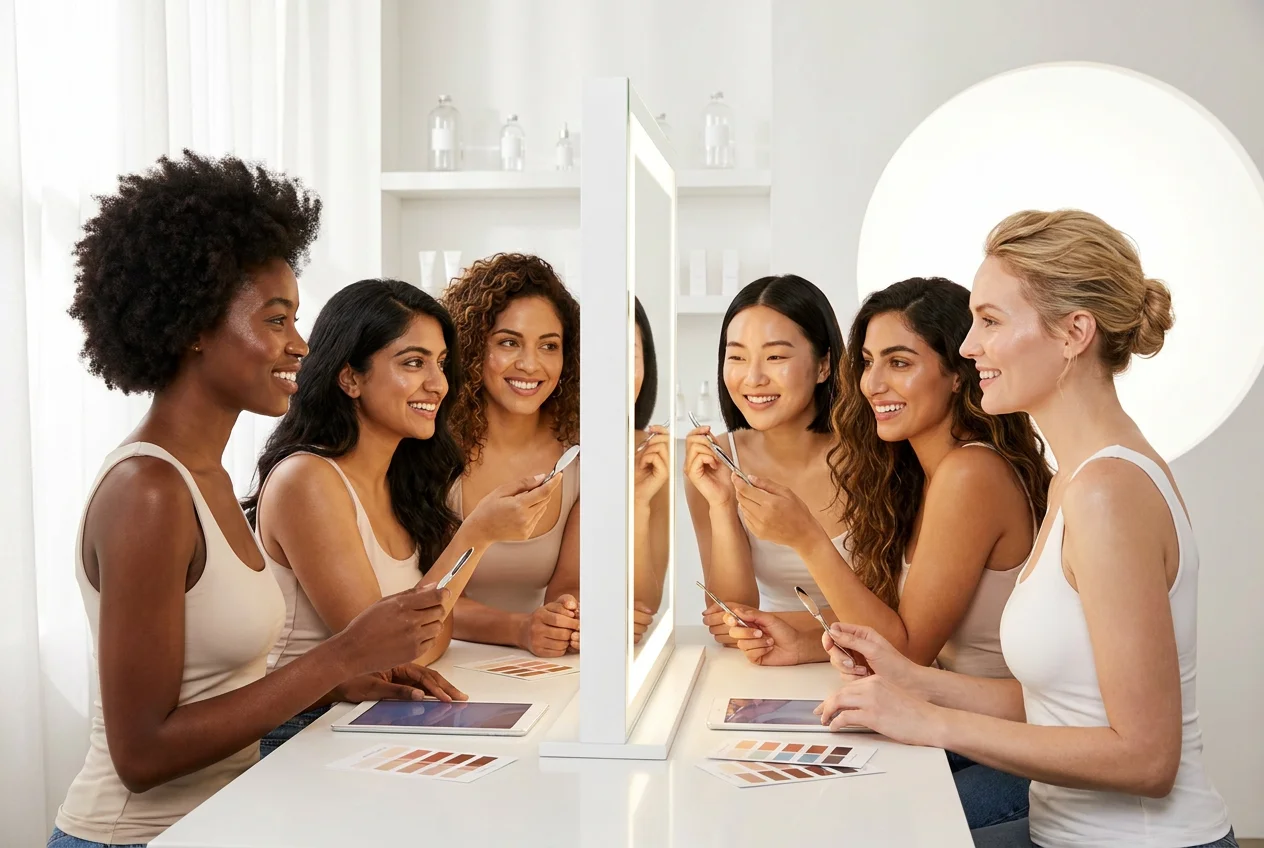
Anyone who has watched a “deep” shade range jump from one undertone to another knows the problem. Shade depth alone is not enough. Brands may have olive, neutral, golden, red, or peach undertones at similar depths. Better tone references help AI avoid simplistic matching and improve cross-brand recommendations for every shade.
Flashback and finish checks
Flashback is influenced by formula, SPF filters, silica, lighting, and camera flash, but tone calibration matters too. If an AI system poorly reads skin depth, it may miss when a product leaves a visible cast in photos. This is especially relevant in makeup try-on and event planning workflows, including tools like our AI Makeup Checker and Event Prep Mode.
What to look for in melanin-aware beauty tech
If you are using beauty AI, the best question is not “Does it mention diversity?” but “Can it show how it handles diversity well?” Look for signs that a platform is built with inclusive evaluation in mind.
It references both Fitzpatrick I-VI and Monk 1-10 when relevant.
It accounts for undertones, not just depth.
It works across inconsistent lighting.
It avoids one-size-fits-all advice.
It is transparent about limits.
That is also why GlowLog centers a melanin-aware approach to AI beauty. Inclusion is not a visual trend. It is a testing standard, a product design choice, and an ongoing responsibility.
Why this matters beyond AI
The Monk Skin Tone scale also matters culturally. Measurement systems influence which faces are seen clearly, which products get built, and who gets treated as “normal” by default. In beauty, that affects shade ranges, campaign imagery, swatch photography, and how users interpret their own skin in digital spaces.
When better standards are used, people are less likely to be misread by a camera or ignored by a recommendation system. That is good science, but it is also good product design. It supports trust. It helps users feel that a tool was built with them in mind, not adapted after the fact.
If you want to explore this firsthand, you can Try GlowLog in the AI Beauty Studio to see how tone-aware analysis, Glow Score tracking, and personalized insights work together. And if you want to compare features or starter options, View Plans for details.
The bottom line
The Monk Skin Tone scale gives beauty AI a more inclusive visual framework for understanding skin tone in images, especially when paired with thoughtful testing and undertone-aware design. It does not replace Fitzpatrick I-VI, and it does not guarantee fairness on its own. But it is an important step toward smarter, more accurate tools that respect the full spectrum of human skin. In a category where image quality drives recommendations, better representation is not extra credit. It is core infrastructure.
GlowLog provides educational beauty and skincare insights and tracking support. It does not provide medical advice, diagnosis, or treatment. Always consult a qualified dermatologist or healthcare professional for medical concerns. Individual results may vary.
See your skin’s story clearly.
Track hydration, texture, pigmentation, tone evenness, and glow over time with melanin-aware AI built for every shade.