
Hormonal Breakouts vs Fungal Acne Explained
Learn how hormonal breakouts and fungal-acne-like bumps differ, what clues to track, and how to use skin data without self-diagnosing.
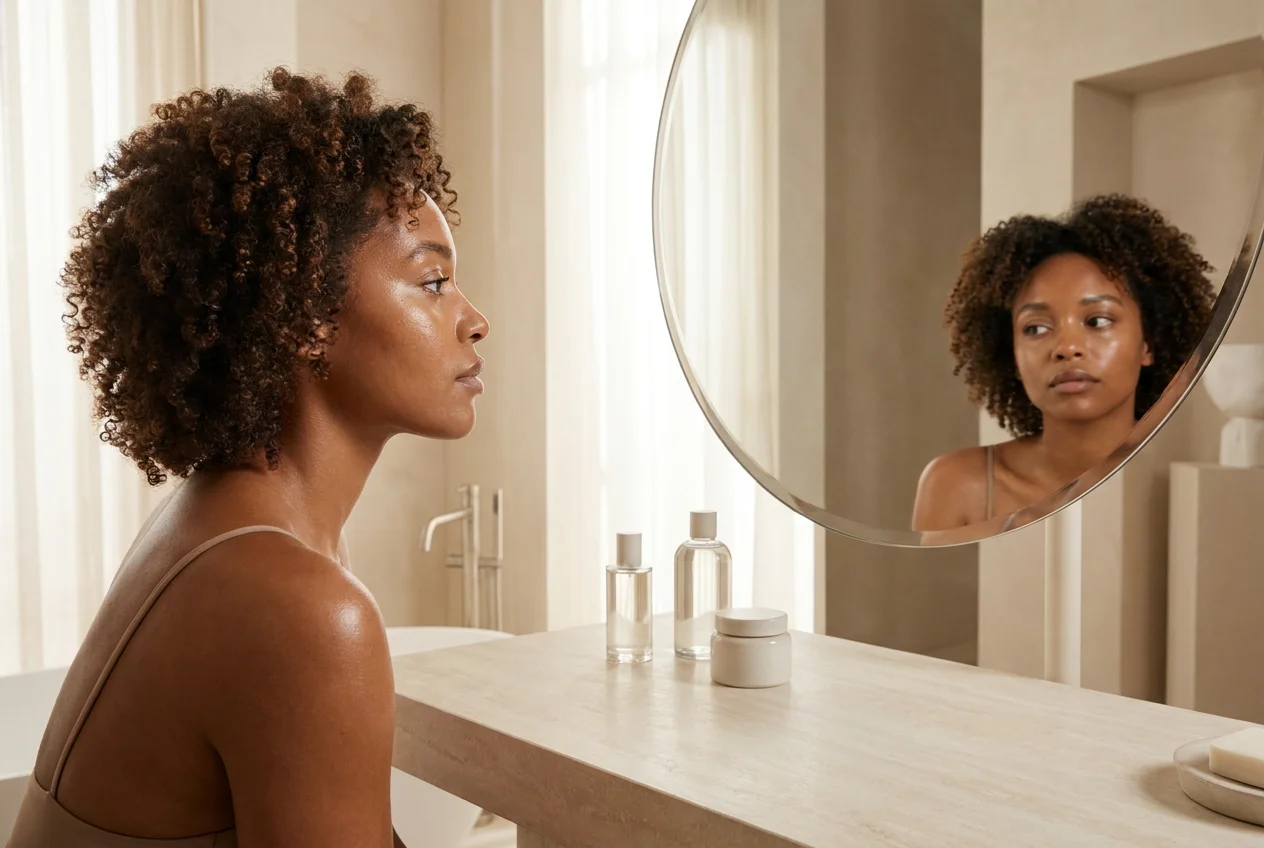
Hormonal breakouts and fungal-acne-like bumps can look similar at a glance, but the pattern, timing, itch level, and product response often differ. The most useful first step is not guessing a diagnosis—it is tracking what you see in consistent lighting, where it appears, how it feels, and what changed before it showed up. That kind of pattern logging is especially helpful across every shade, where post-inflammatory marks can linger longer than the original bump and make progress harder to judge.
Why these two get confused so often
People use “fungal acne” as a catch-all phrase online, but in real life, breakouts can have overlapping features. Small forehead bumps, jawline flares, itchy clusters, and texture changes may all be described as “acne,” even when the trigger is different. That is why a science-first approach matters: notice the pattern before changing five products at once.
For melanin-aware tracking, this matters even more. On deeper skin tones, the after-effects of inflammation—like lingering brown, gray-brown, red-brown, or purple-brown marks—can be more visible for longer than the active breakout itself. A good baseline photo set, ideally with AI Skin Analysis or weekly check-ins, can help separate “new bumps” from “old marks still fading.”
What people usually mean by hormonal breakouts
Hormonal breakouts are commonly described as flares that follow a cycle or repeat in familiar zones. They are often deeper, more tender, and slower to resolve than a random clogged pore. This does not mean every chin breakout is hormonal, but timing and location can offer clues.
Common pattern clues
Location:
Timing:
Feel:
Lesion variety:
After-effects:
If your skin seems to flare in a repeating rhythm, track that rhythm. Note the week it appears, how long it lasts, and whether sleep, stress, travel, or routine shifts show up alongside it. Your Glow Reports become more useful when they reflect trends, not isolated bad-skin days.
What people usually mean by fungal-acne-like bumps
The phrase “fungal acne” is popular online, but it is not a DIY label to apply with certainty. What many people are noticing is a uniform-looking cluster of small bumps, often with itch, that seems to flare in hot, sweaty, occlusive conditions or after heavy product layering. If you suspect a medical condition, a dermatologist is the right person to evaluate it.
Common pattern clues
Location:
Look:
Feel:
Triggers:
Response:
This is where restraint helps. If the texture seems sudden and uniform, avoid throwing exfoliating acids, retinoids, and heavy oils at it all at once. A calmer approach gives you cleaner data and less chance of irritating the skin barrier.
Hormonal vs fungal-acne-like: the easiest comparison points
You do not need to diagnose your skin to observe it well. Start with these side-by-side questions:
Where is it?
Does it itch, sting, or feel sore?
Is every bump similar?
What changed before it appeared?
Does it follow a recurring schedule?
Important note
Pattern recognition is useful; self-diagnosis is limited. If bumps are persistent, spreading, painful, or confusing, consult a dermatologist rather than relying on internet labels.
Why tracking matters more than guessing
The biggest mistake is often changing too many variables at once. If you swap cleanser, serum, moisturizer, scalp oil, and laundry detergent in the same week, you lose the ability to tell what helped. Better tracking creates better decisions.
A simple system works best:
- Take photos in the same light, angle, and distance.
- Log location: forehead, cheeks, jawline, chin, neck, chest, or back.
- Log sensation: itchy, tender, dry, tight, or neutral.
- Log timing: cycle phase, stressful week, travel, heat, high-sweat days.
- Log new variables: hair products, helmets, hats, rich creams, makeup, sunscreen changes.
If you want more structure, AI Beauty Studio can help you review visible skin changes over time, while Melanin-Aware AI Beauty is designed to interpret appearance across Fitzpatrick I-VI and Monk 1-10 with more context for melanin-rich skin. That matters because redness, discoloration, and healing can present differently across skin tones.
Special considerations for deeper skin tones
On deeper complexions, the active breakout may not be the whole story. The mark left behind can become the main visible concern, even when the bump itself is gone. That is why “is it improving?” can feel frustratingly hard to answer in the mirror.
A melanin-aware lens helps in three ways:
- Separating active texture from leftover discoloration: a flat mark is different from an inflamed bump.
- Avoiding undertone confusion: brown, gray-brown, red-brown, and violet-brown marks may shift in appearance depending on lighting.
- Tracking progress fairly: improvement may show up first as less inflammation, then fewer new spots, then gradual fading.
If makeup is part of your routine, visible texture and marks can also affect how base products sit on skin. Tools like Foundation Match and the AI Makeup Checker can help you evaluate whether a complexion product is emphasizing flakes, clinging to bumps, or creating flashback—without treating any skin tone as the default.
What not to do when you are unsure
When skin changes suddenly, it is tempting to go into “attack mode.” Usually, that backfires.
Avoid these common mistakes
- Do not over-exfoliate. More acids do not automatically mean faster clarity.
- Do not stack too many actives at once. Irritation can create new confusion.
- Do not ignore hair and sweat factors. Pomades, edge products, hats, and workout friction all matter.
- Do not judge progress day to day. Weekly comparisons are more reliable than mirror checks every hour.
If you are reviewing ingredients, the Skincare Ingredient Checker and broader Ingredient Insights can help you spot whether your routine has become heavier, more irritating, or more complicated than you intended.
A simple 2-week observation plan
If you are not sure what pattern you are seeing, use a short observation window before making major changes.
Keep your core routine steady.
Pause unnecessary extras.
Photograph every 3-4 days.
Record symptoms.
Note context.
This is also useful before special occasions. If you are heading into wedding season, travel, or a shoot, Event Prep Mode can help you avoid last-minute routine chaos and focus on what keeps your skin looking calm and consistent.
The bottom line
Hormonal breakouts often show up as deeper, cycle-linked flares around the lower face, while fungal-acne-like bumps are often described as itchier, more uniform clusters in heat- and sweat-prone areas. But the smartest move is not to label your skin from one mirror check. Track location, timing, sensation, and triggers in a consistent way, especially if you are also dealing with marks that linger on melanin-rich skin. Better observations lead to better questions—and better questions lead to smarter next steps.
If you want a clearer view of your patterns over time, you can View Plans or Try GlowLog to track skin changes with a melanin-aware, every shade approach.
GlowLog provides educational beauty and skincare insights and tracking support. It does not provide medical advice, diagnosis, or treatment. Always consult a qualified dermatologist or healthcare professional for medical concerns. Individual results may vary.
See your skin’s story clearly.
Track hydration, texture, pigmentation, tone evenness, and glow over time with melanin-aware AI built for every shade.