
How AI Foundation Matching Reads Undertones
See how AI foundation matching evaluates depth, undertone, and flashback risk across every shade, with melanin-aware tone calibration.
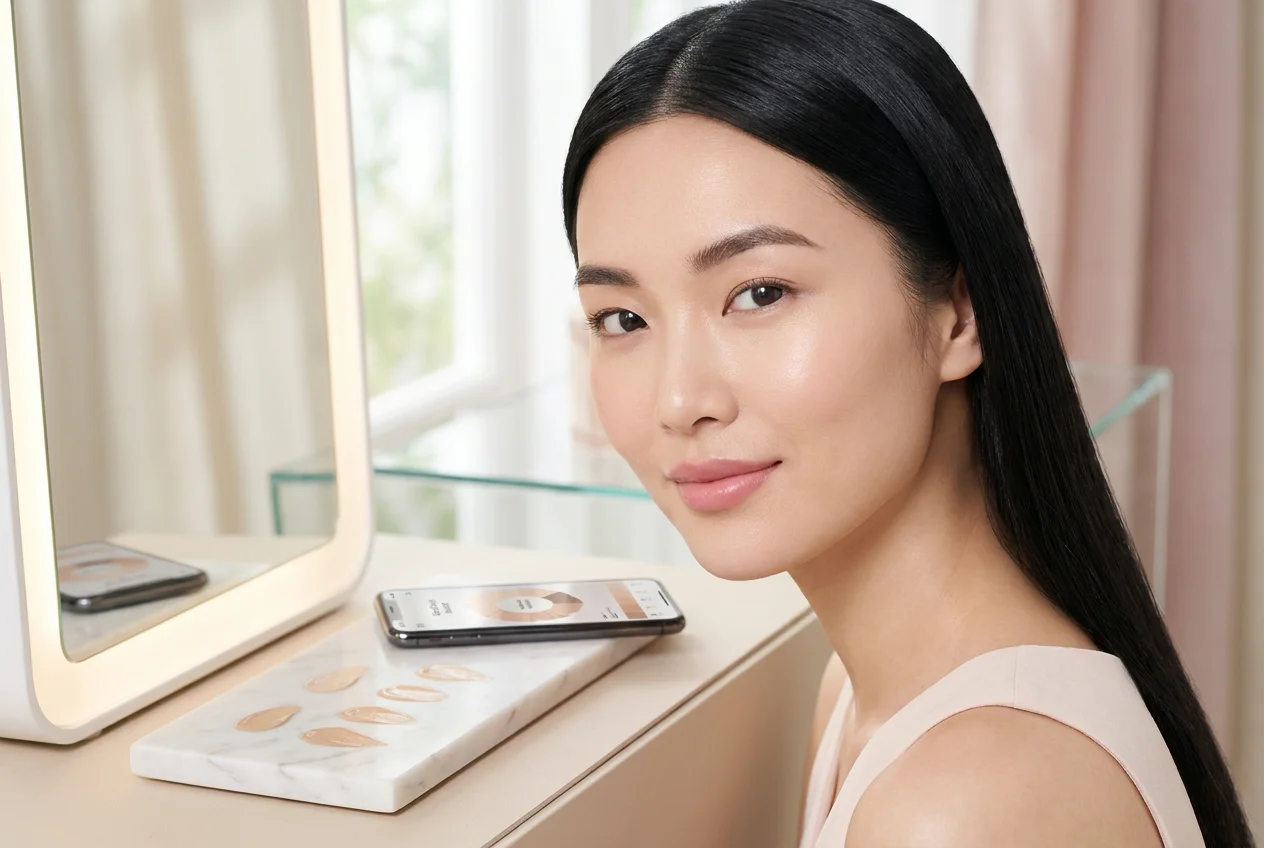
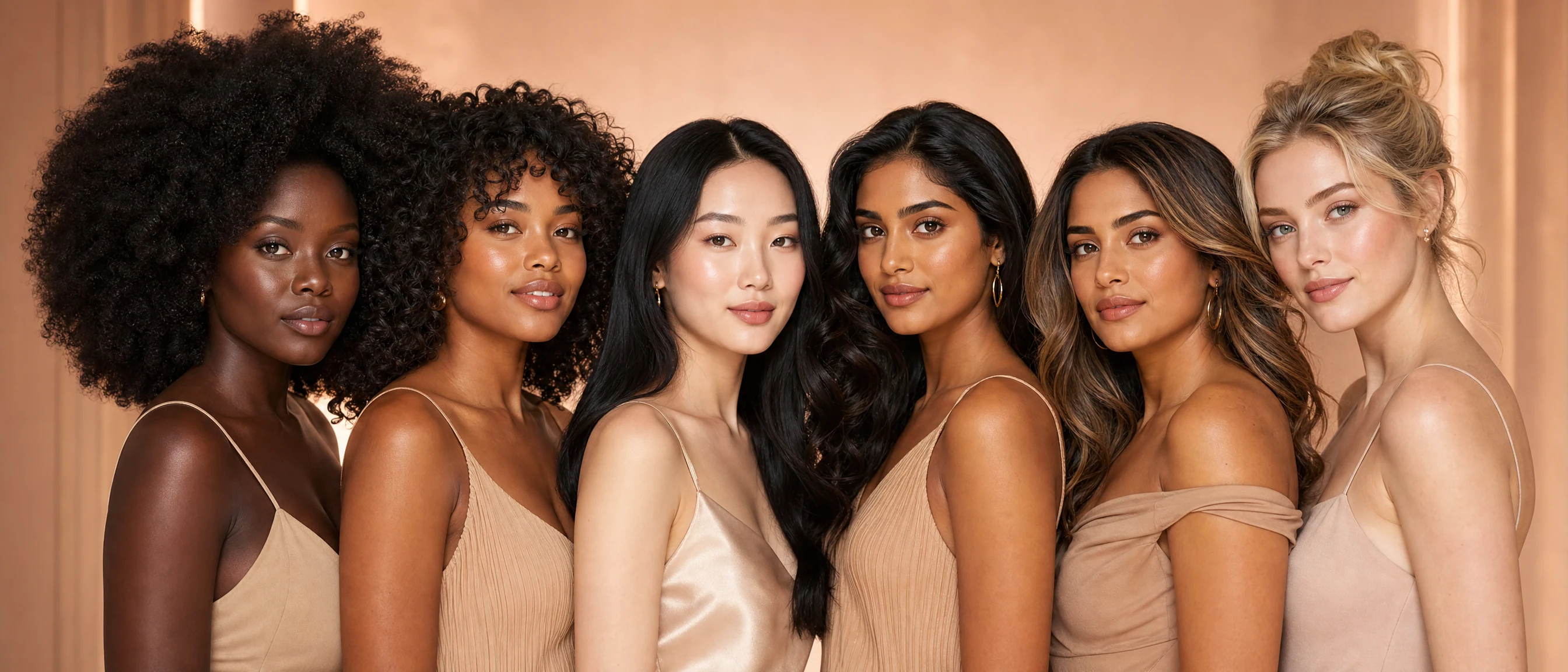
AI foundation matching works best when it measures three things separately: skin depth, undertone, and finish behavior in different lighting. A strong system does not guess from one selfie or treat any complexion as the baseline. Instead, it uses tone calibration tools, checks how products may look on camera, and stays melanin-aware across Fitzpatrick I-VI and Monk 1-10 so every shade gets a more useful, realistic match.
Why foundation matching is harder than it looks
Most people already know that “light, medium, deep” is not enough. Two people can have similar depth but completely different undertones. One may lean golden, another olive, another neutral, another cool red. On top of that, formulas can oxidize, sheer out, or leave a cast in flash photography. That is why shade matching is not just about color picking. It is about predicting how a product will behave on real skin, in real light, on real faces.
This is especially important when beauty tools are used across every shade. If a system was trained too heavily on narrow examples, it may over-warm deeper skin, flatten olive undertones, or miss grayness and flashback risk entirely. GlowLog approaches this through melanin-aware analysis and what we call Melanin Intelligence: evaluating skin visibly and contextually rather than assuming one universal reference point. You can see that approach across our melanin-aware AI Beauty tools and the broader AI Beauty Studio.
What AI is actually analyzing
1. Depth
Depth is the overall lightness-to-deepness range of the complexion. Good AI does not reduce this to a simplistic category. It places skin on a more continuous spectrum and checks consistency across the forehead, cheeks, jawline, and neck area when visible. This helps avoid a match that looks right in one small area but off everywhere else.
Because perceived depth shifts with exposure and shadows, high-quality systems also try to normalize for lighting. That matters for users across Fitzpatrick I-VI and Monk 1-10, where underexposed images can make deeper tones appear flatter and overexposed images can wash out lighter tones.
2. Undertone
Undertone is the subtle hue underneath visible surface color. It is often described as warm, cool, neutral, olive, golden, peach, or red, but real skin does not always fit neatly into one label. AI usually estimates undertone by comparing color relationships across multiple facial zones instead of reading one patch in isolation.
For example, an olive undertone may show as a balance of muted green-gray and yellow cues, while a warm golden undertone may reflect more yellow-orange. The goal is not to force everyone into a narrow set of buckets. The goal is to find the direction that makes complexion products disappear more naturally into skin.
3. Surface variation
Skin is not one perfectly even tone. People may have natural redness around the nose, deeper pigmentation around the mouth, brighter high points, or post-breakout marks that should not define the whole match. Good AI separates temporary or localized variation from overall tone so a foundation recommendation is based on the face as a whole, not the noisiest area.
That is also where longitudinal tracking can help. If you already use Glow Reports or AI Skin Analysis, trend data can give extra context about whether visible color shifts are stable baseline features or short-term changes.
4. Finish behavior and flashback risk
A shade match can still fail if the finish behaves poorly under flash. Flashback happens when ingredients that reflect light strongly make the face appear lighter or ashier in photos than it does in person. Silica, some mineral sunscreens, and certain setting powders are common examples in beauty conversations, though the full outcome depends on formula, amount, and lighting.
AI can flag risk by analyzing how products visually sit on skin and how strongly they reflect in bright conditions. That is not a medical or safety judgment. It is a cosmetic performance check: will this look cohesive in daylight, indoor lighting, and event photography?
How undertone detection can go wrong
Even advanced tools have limits. Undertone prediction is most likely to drift when photos are heavily filtered, shot in mixed lighting, or taken with strong color casts from walls, LEDs, or sunset light. A cool-toned room can make neutral skin look pinker. Warm bathroom lighting can make olive skin look more golden than it is. A single front-camera image also compresses detail.
Better input, better match
For the most reliable AI read, use indirect natural light, keep your face centered, avoid heavy filters, and include your neck area if possible. The less visual noise, the easier it is to separate depth from undertone.
Another issue is dataset bias. If an AI system has not seen enough variation across deeper tones, muted undertones, or mixed heritage features, it may overcorrect toward warmer shades. That is why inclusive calibration matters. Referencing both Fitzpatrick I-VI and Monk 1-10 helps create a more flexible picture of skin tone range, especially when discussing cosmetic matching rather than sun-response alone.
How AI helps avoid flashback
Flashback is not only about choosing the right foundation shade. It often comes from the interaction between foundation, sunscreen, primer, powder, and camera flash. AI can be useful here because it evaluates the final look, not just the product label. In practice, that means checking whether the center of the face appears noticeably lighter, whether under-eye setting looks reflective, and whether the jaw and neck stay harmonious under bright light.
If you want to test your finished base rather than only your product choice, the AI Makeup Checker can help spot visible mismatch patterns, while Foundation Match focuses more directly on finding a better depth-undertone fit.
What a melanin-aware foundation match should do
Separate depth from undertone
Deeper skin is not automatically warm, and lighter skin is not automatically cool.
Read multiple zones
Cheeks, forehead, jaw, and neck can differ. The best match balances them.
Account for photography conditions
Lighting correction should reduce false warmth, false coolness, and overexposure.
Respect visible variation
Hyperpigmentation, redness, and shadows should not override overall complexion reading.
Check finish as well as shade
A good match should look believable in daylight and on camera, with lower flashback risk.
That same logic supports better product education overall. If you are comparing base products or checking whether certain formulas may clash with your routine, the Skincare Ingredient Checker and Ingredient Insights can add context beyond marketing claims.
How to use AI results without overtrusting them
AI is a tool, not a final authority. The best use case is decision support. Think of it as a fast first pass that narrows your options and gives you a framework: depth, undertone, finish, and flash-readiness. Then you confirm with wear time, daylight checks, and how the shade looks against your neck and chest.
Start with a clean, well-lit photo.
Review the AI read for depth and undertone separately.
Check whether the recommendation mentions neutral, olive, golden, cool, or red balance.
Test the result in natural light and indoor light.
Take one flash photo before an event.
If you are getting ready for a wedding, shoot, or night out, this matters even more. Base products that look fine in a mirror can shift on camera. That is where Event Prep Mode can help you pressure-test your look ahead of time instead of discovering issues in the final photos.
The bottom line
The smartest AI foundation matching does not just ask, “What shade are you?” It asks, “What is your depth, what is your undertone, how stable is that reading in this lighting, and how will this finish behave on camera?” That wider view is what makes recommendations more useful across every shade. In GlowLog, those insights connect with your broader beauty tracking, from your Glow Score to your Glow Reports, so the goal is not perfection. It is clearer information you can actually use.
If you want to explore your match, compare results, or build a more confident routine around your look, try GlowLog through the AI Beauty Studio or View Plans.
GlowLog provides educational beauty and skincare insights and tracking support. It does not provide medical advice, diagnosis, or treatment. Always consult a qualified dermatologist or healthcare professional for medical concerns. Individual results may vary.
See your skin’s story clearly.
Track hydration, texture, pigmentation, tone evenness, and glow over time with melanin-aware AI built for every shade.